
Hot Shot Trucking Insurance
Hot shot trucking insurance exists because urgency reshapes operational risk.
Hot shot operations are defined by speed, flexibility, and short-notice freight movement. Loads are smaller, delivery windows are tighter, and routes change frequently.
Hot shot trucking insurance cost operates within the broader trucking market, but its risk profile differs significantly from traditional Unlike long-haul trucking that follows structured schedules or local delivery that operates within predictable zones, hot shot trucking operates under continuous time pressure.
This changes how risk develops. Decision-making happens faster, equipment is mixed, and exposure shifts from mileage-based risk to operational intensity. For this reason, hot shot trucking insurance is not a reduced version of standard box truck insurance. It is a distinct insurance structure designed around expedited activity, variable equipment, and compressed timelines.
What Hot Shot Trucking Insurance Actually Is
Hot shot trucking insurance refers to the insurance framework used for expedited freight operations typically performed with heavy-duty pickup trucks and trailers rather than traditional Class 8 tractors.
What defines hot shot semi truck insurance is not truck size alone.
It is defined by:
Time-sensitive freight movement
Flexible routing and scheduling
Mixed truck and trailer configurations
Operations that fall between light-duty and heavy-duty trucking
Insurance must respond to urgency-driven exposure, not just vehicle classification.
What defines hot shot trucking insurance is not truck size alone.
It is defined by:
Time-sensitive freight movement
Flexible routing and scheduling
Mixed truck and trailer configurations
Operations that fall between light-duty and heavy-duty trucking
Insurance must respond to urgency-driven exposure, not just vehicle classification.
Why Hot Shot Trucking Insurance Is Structurally Different
Hot shot operations face a risk profile driven by speed and variability, not consistency.
Key structural differences include:
Short decision windows under delivery pressure
Rapid load turnover
Mixed-use equipment
Less standardized operating patterns
Losses often involve:
Highway incidents during expedited runs
Cargo damage caused by rushed handling
Equipment mismatches between truck and trailer
Coverage gaps created by improper classification
Insurance assumptions built for traditional trucking frequently fail when applied to hot shot operations.
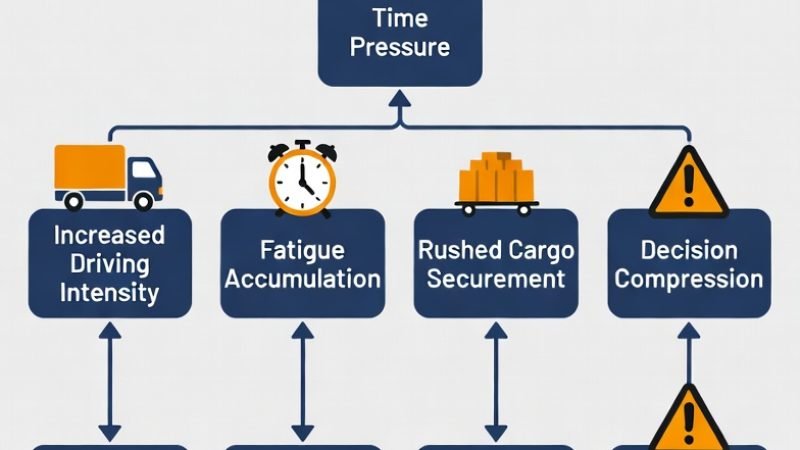
The Expedited Operations Risk Model (Core Authority Framework)
Hot shot losses typically originate from four expedited-operation exposure drivers.
Time-Pressure Exposure
Urgency increases:
Driving intensity
Fatigue accumulation
Decision compression
Sustained time pressure changes loss frequency and severity.
Mixed Equipment Exposure
Hot shot operations commonly involve:
Heavy-duty pickup trucks
Gooseneck, flatbed, or utility trailers
Rapid changes in load size and weight
Risk increases when insurance structure does not reflect actual equipment use.
Cargo Variability Exposure
Hot shot freight often includes:
Machinery components
Construction materials
Emergency or replacement parts
Each load introduces different handling, securement, and loss characteristics.
Classification Exposure
Hot shot operations are frequently misclassified as:
Personal vehicle use
Light commercial use
Misclassification creates some of the most serious and expensive coverage gaps in this niche.
Core Coverage Layers in Hot Shot Trucking Insurance
Hot shot Flatbed truck insurance works best when understood as urgency-aware risk protection.
Liability Coverage (Expedited Exposure Layer)
Liability coverage responds to injury or property damage caused by hot shot operations.
For hot shot trucking:
Highway exposure is common
Speed and urgency amplify severity
Third-party involvement is frequent
This layer defines the operation’s external responsibility boundary.
Physical Damage Coverage (Truck & Trailer Protection)
Physical damage coverage applies to both the pickup truck and the attached trailer.
For hot shot operators, this coverage directly affects:
Ability to continue work
Repair turnaround time
Operational continuity
Pickup-based equipment often has limited replacement flexibility.
Cargo Responsibility Coverage
Cargo coverage applies when expedited freight is damaged or lost.
Exposure depends on:
Freight type
Handling under time pressure
Securement responsibility
Cargo losses in hot shot trucking often stem from urgency rather than distance.
Downtime & Operational Disruption Considerations
Downtime in hot shot trucking is uniquely disruptive:
Loads are time-critical
Missed deliveries have immediate consequences
Replacement capacity may be unavailable
Coverage addressing downtime must be evaluated carefully.
How Insurers Evaluate Hot Shot Risk Internally
Insurers typically assess hot shot operations using operational signals rather than labels.
Key evaluation factors include:
Vehicle classification consistency
Trailer size and weight capacity
Frequency of expedited or same-day runs
Cargo variability across trips
Highway versus regional exposure
Misalignment between declared operations and actual activity often leads to coverage friction.
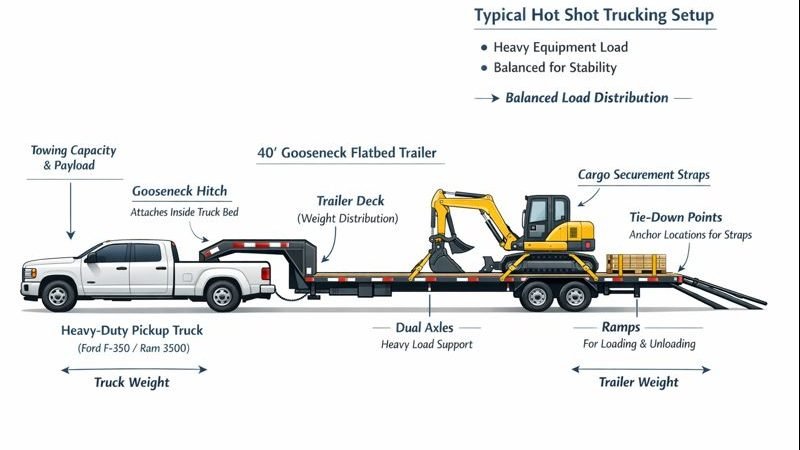
How Hot Shot Insurance Changes as Loads Get Heavier
As hot shot operations scale, exposure shifts.
Common transition points include:
Larger or heavier trailers
Higher-value freight
Longer interstate runs
Insurance structure must evolve as operations move closer to traditional freight hauling, even if the truck itself does not change.
Hot Shot Trucking Insurance vs Other Commercial Truck Insurance Types
The distinction is operational.
Semi trucking focuses on long-haul distance
Box trucks focus on delivery density
Flatbeds focus on load securement
Hot shot trucking focuses on urgency and flexibility
Applying fleet or long-haul insurance logic to hot shot operations creates gaps.
Common Coverage Gaps in Hot Shot Trucking Insurance
Recurring issues include:
Misclassification of vehicle use
Trailer coverage not aligned with actual equipment
Cargo exposure underestimated
Deductibles misaligned with expedited downtime risk
These gaps often surface only after a claim.
How Hot Shot Trucking Insurance Evolves Over Time
Insurance needs shift as hot shot businesses mature.
Common inflection points include:
Expansion into heavier freight
Longer operating distances
Repeat expedited contracts
More structured dispatch workflows
Coverage structure should evolve alongside operational complexity.
FAQs
What is hot shot trucking insurance?
Hot shot trucking insurance is the insurance framework designed for expedited freight operations using pickup trucks and trailers.
Why is hot shot trucking often misclassified by insurers?
Because hot shot operations use pickup trucks, they are sometimes incorrectly categorized as personal or light commercial use, which creates coverage gaps.
Is hot shot trucking insurance different from semi truck insurance?
Yes. Hot shot trucking insurance focuses on expedited operations and mixed equipment rather than long-haul Class 8 trucking.
Does hot shot trucking insurance need to change as the business grows?
Yes. Changes in freight size, trailer capacity, and operating distance often require coverage adjustments.
Bottom Line
Hot shot trucking insurance exists because urgency reshapes exposure.
When insurance structure reflects time pressure, equipment variability, and expedited activity, it supports the operation. When it does not, coverage gaps appear quickly.
Understanding that structure comes before any cost or provider decision.