
Passenger Liability Insurance: Coverage, Claims, Limits & Authorized Rider Rules
When the Ride-Along Changes the Claim
A truck slows to exit the highway.
The driver brakes, shifts lanes, and continues down the route.
There is no crash. No exterior damage.
Inside the cab, however, a ride-along loses balance during the maneuver, strikes an interior surface, and later reports an injury.
Events like this explain why passenger liability insurance exists. Passenger injury claims do not always follow dramatic collisions. They often develop during normal vehicle operation when occupants inside the vehicle are injured.
For trucking companies and other transportation businesses, these situations create liability exposure because the injured person was riding inside the insured vehicle.
What Passenger Liability Insurance Is
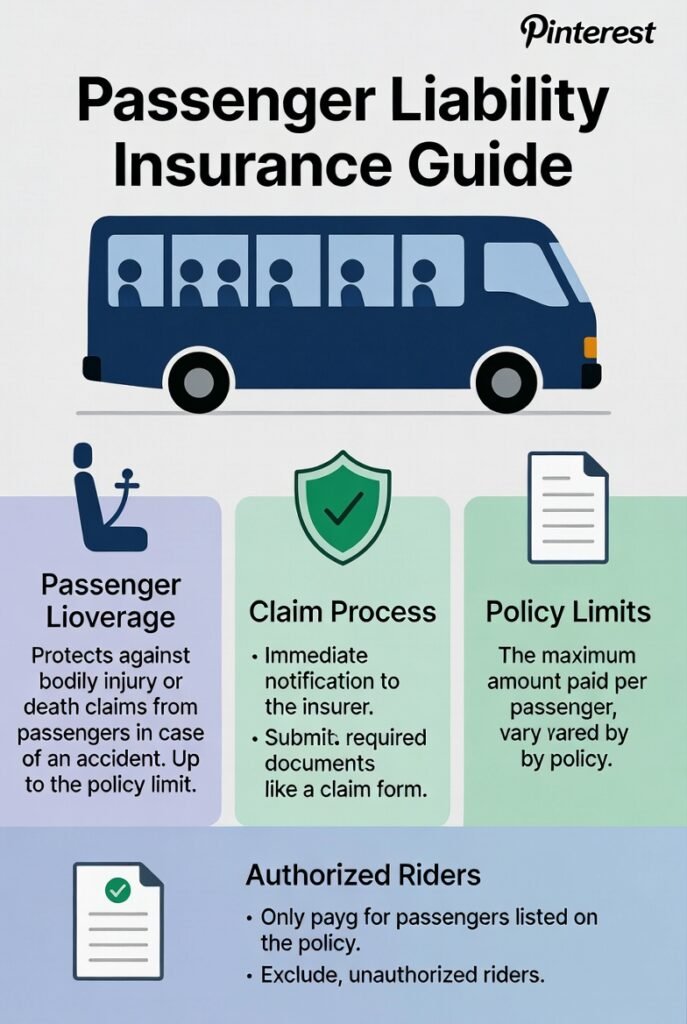
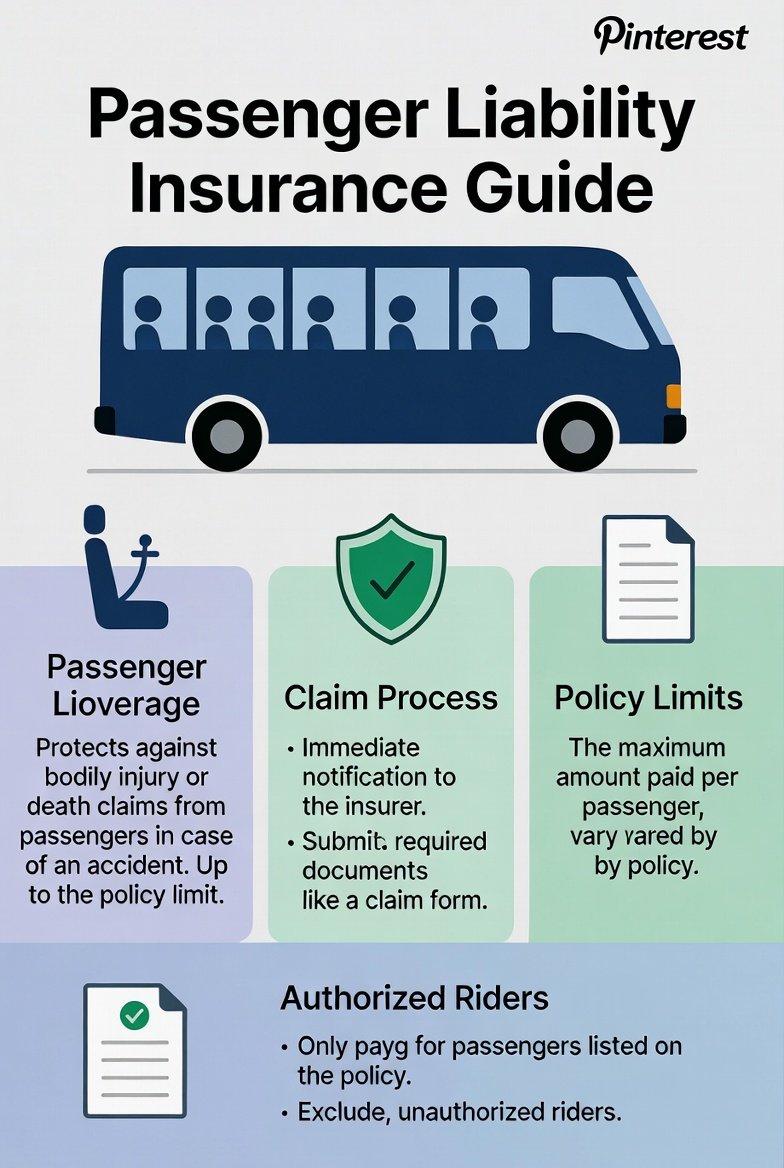
Passenger liability insurance refers to coverage for bodily injury suffered by passengers riding in a vehicle operated by the insured driver.
In most commercial vehicle operations, this protection is included within a commercial auto liability policy, which addresses injuries or damage caused by the vehicle.
Passenger liability typically applies when:
- a passenger is injured during vehicle movement
- the injury results from driver operation of the vehicle
- the injured person was an authorized occupant
The coverage normally pays for:
- medical expenses
- legal defense costs
- settlements or court judgments
Passenger liability operates alongside broader liability protection structures such as
which address injuries to people outside the vehicle.
Passenger liability focuses specifically on occupants inside the vehicle.
Why Passenger Injury Risk Is Different
Passenger injury exposure differs from other auto liability risks.
Passengers Are Already Inside the Vehicle
Unlike third-party accident victims, passengers are already riding in the vehicle when the incident occurs.
Injuries Can Occur Without a Collision
Sudden braking, sharp turns, or abrupt maneuvers can cause passengers to lose balance and strike interior surfaces.
Authorization Becomes Critical
Coverage evaluations often depend on whether the passenger was permitted to ride in the vehicle under company rules or insurance policy terms.
For this reason, passenger liability claims often focus on authorization and documentation, not just accident severity.
Common Passenger Injury Scenarios
Passenger liability insurance may apply to several types of incidents.
Sudden Braking Injury
A passenger falls forward during emergency braking and sustains a neck or shoulder injury.
Collision Passenger Injury
A passenger suffers injuries during a crash involving another vehicle.
Interior Movement Injury
A passenger standing or moving inside the vehicle loses balance during a maneuver.
Entry or Exit Injury
A passenger slips or falls while entering or leaving the vehicle.
These incidents show why passenger liability exposure is not limited to high-speed crashes.
What Passenger Liability Insurance Typically Covers
Passenger liability coverage generally addresses bodily injury to occupants riding in the insured vehicle, subject to policy terms.
Coverage may include:
- medical expenses for injured passengers
- legal defense costs if lawsuits arise
- settlements or judgments related to injury claims
Coverage applies when the injury results from the operation of the insured vehicle.
For example, if a driver swerves suddenly to avoid an obstacle and a passenger is injured, the policy may respond depending on the circumstances.
Passenger Liability Coverage Limits
Passenger liability claims are typically governed by the same liability limits used in commercial auto policies.
These limits define how much the insurer may pay for injury claims.
Limit Type | Explanation |
Per person limit | Maximum payout for one injured passenger |
Per accident limit | Maximum payout for all injuries from a single incident |
For example, a commercial auto policy with $1,000,000 liability coverage may include passenger injury claims within that limit.
Actual coverage depends on the policy structure and passenger classification.
Is Passenger Liability Insurance Required
Passenger liability insurance is not always a separate mandatory policy.
In many commercial auto policies, passenger injury claims are already included within standard bodily injury liability coverage.
However, certain transportation operations may require higher liability limits or specialized coverage, including:
- shuttle or charter services
- passenger transport vehicles
- taxis or ride services
- employee transport vans
Regulatory rules or contractual requirements may specify minimum liability limits when passengers are transported regularly.
Industries Where Passenger Liability Exposure Exists
Passenger liability exposure is not limited to trucking operations.
Several transportation industries face similar risks, including:
- charter buses and shuttle services
- taxi and ride service operators
- delivery vehicles with helpers or trainees
- commercial vans used for employee transportation
While the insurance structure is similar, the number of passengers and operating environment often influence how insurers evaluate risk.
What Passenger Liability Insurance May Not Cover
Passenger liability coverage includes limitations and exclusions.
Common examples may include:
Possible Exclusion | Explanation |
Unauthorized passengers | Riders not permitted under company policy |
Improper seating | Riding outside designated passenger seats |
Workers compensation overlap | Employee injuries covered under worker insurance |
Intentional injury | Deliberate harm or reckless behavior |
These exclusions exist because liability coverage assumes the passenger was authorized and properly seated in the vehicle.
How Passenger Liability Affects Insurance Cost
Passenger exposure can influence the cost of commercial auto insurance.
Insurance providers often evaluate several factors:
- the number of passengers allowed in the vehicle
- whether passengers are employees or third parties
- driver safety history
- ride-along policies or training programs
Operations that regularly transport passengers may face higher premiums because injury claims can involve significant medical expenses.
Passenger Risk for Owner-Operators vs Fleets
Passenger exposure varies depending on the size of the operation.
Owner-Operators
Single-truck operators may occasionally allow helpers or trainees to ride along during deliveries. Without clear authorization, these situations can create liability risk.
Fleet Operations
Fleet companies typically maintain formal ride-along policies that define:
- who may ride in company vehicles
- seating requirements
- when passengers are permitted
Fleet insurance programs often evaluate these policies alongside other liability exposures such as
non-trucking-liability-insurance.
Operational Practices That Reduce Passenger Liability Risk
Passenger injury claims can often be reduced through consistent operating procedures.
Transportation companies commonly implement:
Defined Ride-Along Policies
Clear rules specifying who is allowed to ride in company vehicles.
Seating and Restraint Requirements
Passengers must remain seated with seatbelts during vehicle operation.
Incident Documentation
Recording passenger injuries or unusual events immediately after they occur.
Driver Training
Drivers should understand company policies regarding passengers and ride-along authorization.
These practices help ensure passenger liability claims are evaluated with clear documentation.
Passenger exposure may also intersect with logistics relationships involving brokers, which are explained in
and
When Passenger Liability Insurance Should Be Reviewed
Passenger liability coverage should be reviewed whenever operational practices change.
Common triggers include:
- introducing training ride-along programs
- adding helper roles to delivery operations
- modifying seating configurations in vehicles
- expanding services involving passenger transport
Regular policy reviews help ensure that passenger exposure is properly reflected in the insurance program.
Final Perspective
Passenger liability insurance protects against a form of risk that often develops quietly inside the vehicle.
Unlike third-party accident claims, these cases frequently revolve around authorization, seating position, and documentation rather than dramatic roadway damage.
Understanding how passenger liability coverage works allows transportation operators to align their ride-along policies with insurance expectations. When a routine maneuver leads to an injury claim, clear rules about who was allowed to ride—and how—can determine how that claim is evaluated.