
Tow Truck Insurance
Tow truck insurance cost exists because recovery work places operators between traffic, property, and liability at the same time.
Towing and recovery operations rarely resemble freight transport. A tow truck is often stopped in active traffic, handling disabled vehicles, managing unstable scenes, and assuming temporary control over property that does not belong to the operator. Risk is created not by distance traveled, but by positioning, interaction, and custody.
This is why box truck insurance is not a variation of standard trucking insurance. It is a service-vehicle insurance structure designed around roadside exposure, vehicle custody, and high-frequency recovery activity.
What Tow Truck Insurance Actually Is
Tow truck insurance refers to the insurance framework designed for towing, roadside assistance, and vehicle recovery operations.
What defines tow commercial truck insurance is not truck size or mileage.
It is defined by:
Repeated roadside stops
Work performed outside the vehicle
Physical handling of disabled vehicles
Temporary responsibility for customer property
Insurance must respond to service-driven exposure, not cargo transport.
Why Tow Truck Insurance Is Structurally Different
Tow truck operations face a risk profile driven by environment and custody, not movement.
Key structural differences include:
High exposure while stationary
Work conducted inches from live traffic
Direct interaction with damaged or disabled vehicles
Short, repetitive service cycles
Losses often involve:
Struck-by incidents at roadside
Damage to customer vehicles
Improper hookup, lifting, or release
Property damage during recovery
Many losses occur without any forward travel.
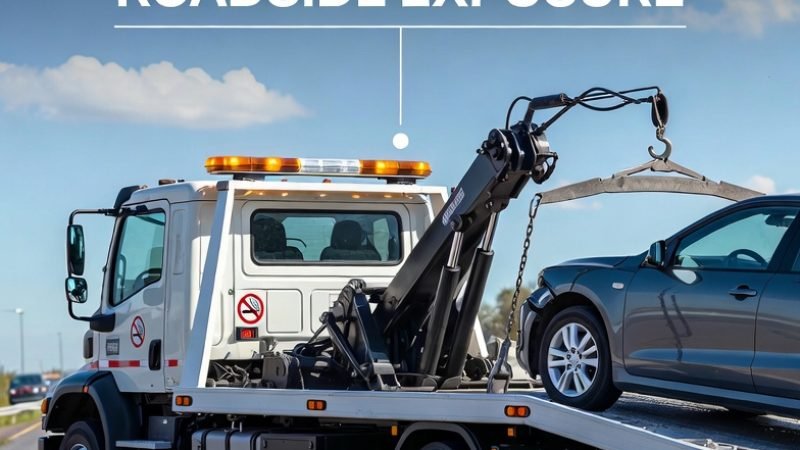
The Roadside Service Risk Model (Core Authority Framework)
Tow truck losses typically originate from four roadside service exposure drivers.
Roadside Positioning Exposure
Risk increases when tow trucks operate:
On shoulders or narrow roadways
In low-visibility conditions
In congested traffic environments
Stationary exposure often exceeds driving exposure.
Vehicle Custody Exposure
Tow operators assume control of:
Disabled vehicles
Accident-damaged property
Impounded or stored vehicles
Custody creates responsibility beyond transport.
Recovery & Hookup Exposure
Risk arises during:
Winching
Hooking
Lifting
Releasing vehicles
Many losses occur before the tow even begins.
Frequency Exposure
Tow trucks perform:
Multiple recoveries per shift
Repetitive similar tasks
High repetition increases cumulative loss probability.
Core Coverage Layers in Tow Truck Insurance
Hot shot trucking insurance works best when understood as custody-based risk protection.
Liability Coverage (Roadside Exposure Layer)
Liability coverage responds to injury or property damage caused during towing operations.
For tow trucks:
Pedestrians and motorists are often nearby
Scenes are unpredictable
Multiple parties may be involved
This layer defines the operation’s external responsibility boundary.
Physical Damage Coverage (Truck & Equipment Protection)
Physical damage coverage applies to
Tow trucks
Booms, winches, and recovery equipment
Damage often occurs during recovery, not while driving.
On-Hook / Vehicle Custody Coverage
This is a defining coverage layer for tow truck insurance.
It responds when:
A customer’s vehicle is damaged while being towed
Damage occurs during hookup, transport, or release
Custody exposure is central to towing operations.
Downtime & Service Interruption Considerations
Downtime impacts towing operations quickly:
Missed dispatch calls
Contract service failures
Reduced response capacity
Coverage addressing downtime varies significantly.
How Tow Truck Insurance Changes Between Light-Duty and Heavy-Duty Recovery
Not all towing exposure is equal.
Light-duty roadside towing typically involves:
Passenger vehicles
Short recovery duration
Lower lift complexity
Heavy-duty recovery introduces:
Larger vehicles
Greter equipment stress
Higher severity loss potential
More complex recovery scenes
Insurance structure must shift as recovery severity increases, even if the business appears similar on the surface.
How Insurers Evaluate Tow Truck Operations Internally
Insurers typically assess towing operations using service-specific signals.
Key evaluation factors include:
Type of towing performed (roadside vs recovery)
Frequency of roadside calls
Equipment and lifting capacity
Vehicle custody procedures
Operating environment (urban vs highway)
Risk is evaluated by how work is performed, not how far trucks travel.
Tow Truck Insurance vs Other Truck Insurance Types
The distinction is functional.
Semi trucks focus on freight transport
Box trucks focus on delivery density
Flatbeds focus on load securement
Tow trucks focus on roadside service and custody
Applying freight-based insurance logic to towing operations creates gaps.
Common Coverage Gaps in Tow Truck Insurance
Recurring issues include:
On-hook coverage misunderstood or missing
Equipment exposure underestimated
Roadside positioning risk overlooked
Deductibles misaligned with frequent minor losses
These gaps often surface during recovery claims.
How Tow Truck Insurance Evolves Over Time
Insurance needs change as towing operations expand.
Common inflection points include:
Addition of heavy-duty recovery
Expansion into highway towing
Contract towing for fleets or municipalities
Increased job frequency
Coverage structure should evolve with service complexity.
FAQs
What is tow truck insurance?
Tow truck insurance is the insurance framework designed for towing, roadside assistance, and vehicle recovery operations.
Why is tow truck insurance more complex than standard trucking insurance?
Because towing involves roadside work, stationary exposure, and temporary custody of customer vehicles rather than simple freight transport.
Why is on-hook coverage important in tow truck insurance?
Because tow operators assume custody of customer vehicles, damage can occur during hookup, transport, or release.
Do tow truck losses usually happen while driving?
Many losses occur while stationary during roadside recovery rather than while driving.
Bottom Line
Tow truck insurance exists because roadside service creates layered exposure.
When insurance structure reflects positioning risk, vehicle custody, and recovery activity, it supports the operation. When it does not, losses surface quickly and repeatedly.
Understanding that structure comes before any cost or provider decision.