
Physical Damage Insurance in Trucking: Coverage, Claims, and Protecting Truck Asset Value
When the Truck Stops Moving
The call usually comes after the incident.
The truck has already been towed. The driver has filed the report. The freight is reassigned. But the truck that normally generates revenue is sitting in a repair yard waiting for inspection.
For many carriers, this moment reveals the real importance of physical damage insurance in trucking.
Unlike liability insurance, which protects against accidents involving other people or property, physical damage coverage protects the truck itself — often the most valuable asset in a trucking business.
If the truck is severely damaged, the decision between repair and total loss can determine how quickly the operation returns to work.
What Physical Damage Insurance Means in Trucking
Physical damage insurance protects a truck or trailer against direct damage to the vehicle itself.
The coverage normally applies when a truck is damaged due to events such as:
- collisions with another vehicle or object
- theft of the truck or major equipment
- vandalism or intentional damage
- fire or explosion
- severe weather events like hail or wind
The key difference is that physical damage insurance protects the truck owner’s property, not third parties.
This coverage works alongside broader trucking policies such as
which primarily addresses accident liability involving other vehicles or property.
Physical damage insurance focuses specifically on protecting the equipment investment.
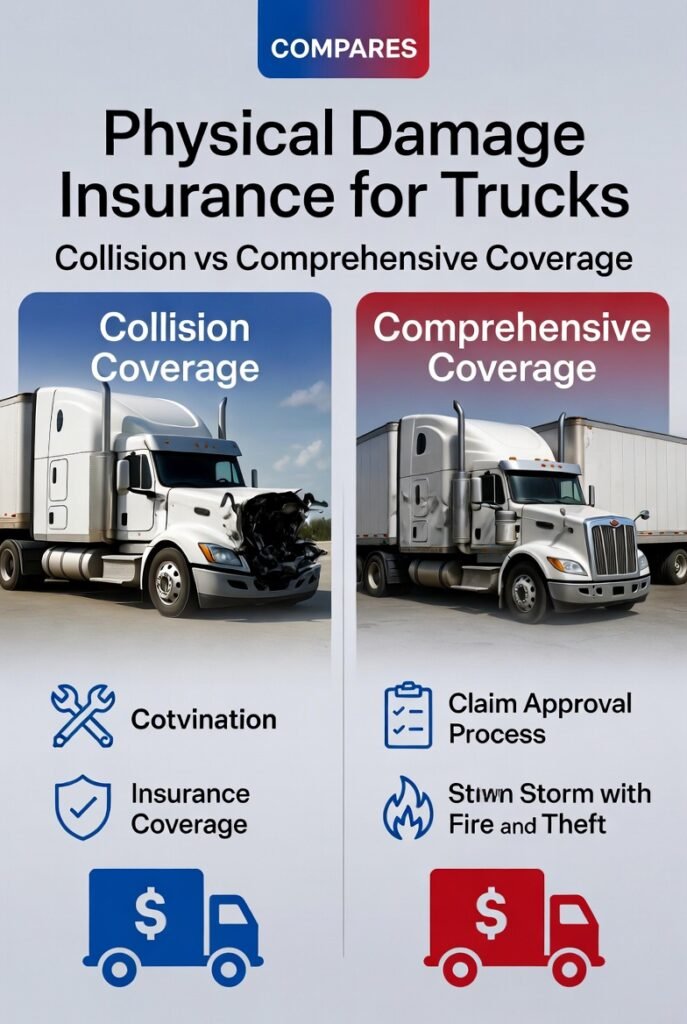
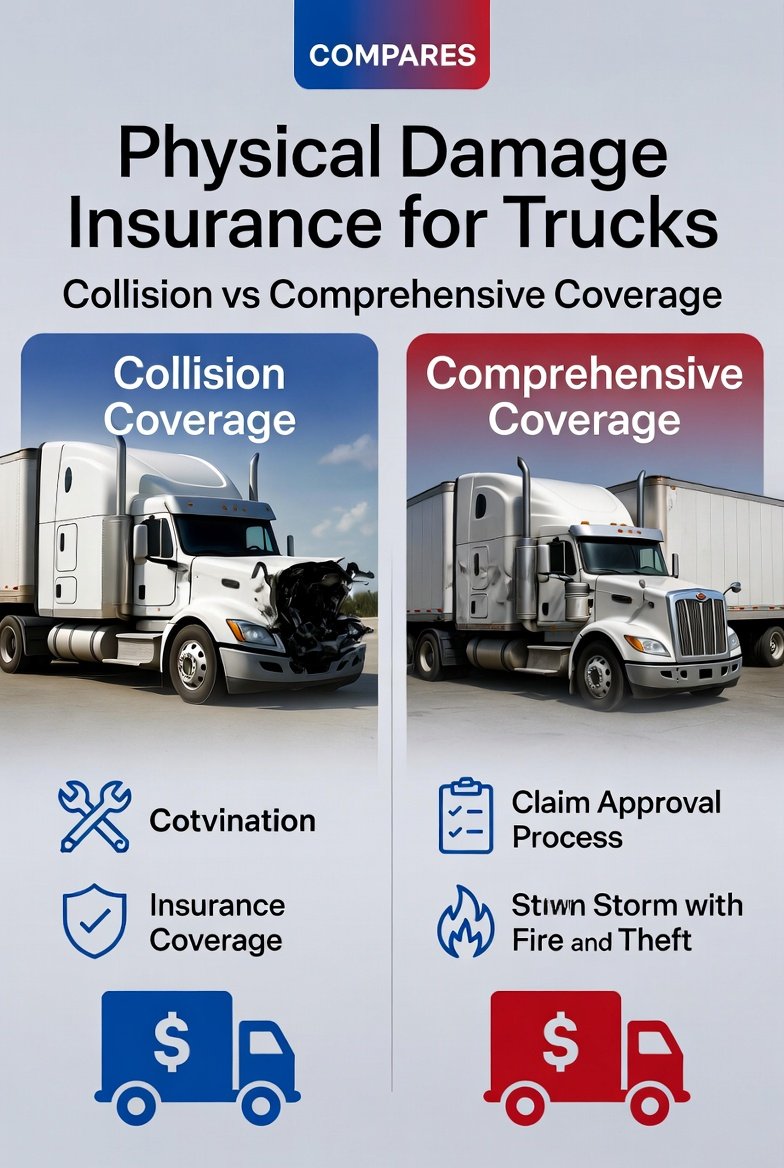
Collision vs Comprehensive Coverage in Trucking
Physical damage coverage is normally divided into two components.
Collision Coverage
Collision coverage applies when a truck strikes another object.
Common examples include:
- hitting another vehicle
- striking a guardrail or barrier
- rollover accidents
- backing collisions in loading yards
Collision claims represent a large share of physical damage losses because trucks operate in tight spaces such as docks and terminals.
Comprehensive Coverage
Comprehensive coverage applies to non-collision events.
Typical examples include:
- theft of the truck
- vandalism while parked
- hail damage
- fire damage
- falling objects or debris
Because trucks often spend extended periods parked in terminals or yards, comprehensive coverage protects against losses that occur outside active driving conditions.
Why Physical Damage Risk Is Different
Truck damage does not always involve fault or negligence.
Physical damage losses often occur under circumstances unrelated to driving behavior.
Weather Exposure
Severe hailstorms, flooding, or wind events can damage parked trucks.
Theft and Vandalism
Commercial trucks parked overnight in unsecured areas face theft risk.
Fire Events
Electrical issues, engine failures, or cargo fires can damage equipment.
These losses highlight why physical damage insurance protects the truck as an operational asset rather than a liability exposure.
What Physical Damage Insurance Typically Covers
While coverage varies by policy, physical damage insurance generally responds to damage affecting the truck itself.
Common covered events include:
Collision damage
Damage caused by impact with vehicles, structures, or objects.
Theft
Loss of the truck or permanently attached equipment.
Fire damage
Damage caused by engine fires, electrical faults, or external fires.
Weather damage
Loss caused by hail, windstorms, or falling debris.
This protection helps carriers recover financially after unexpected equipment damage.
What Physical Damage Insurance Usually Does NOT Cover
Physical damage insurance does not cover every type of loss.
Most policies exclude certain conditions.
Common Exclusion | Explanation |
Mechanical breakdown | Engine failure unrelated to damage |
Wear and tear | Normal deterioration of vehicle components |
Tire damage | Tire punctures or failures unless tied to a covered event |
Improper maintenance | Damage caused by neglected maintenance |
Intentional damage | Deliberate damage by the owner |
Understanding these exclusions helps trucking operators avoid misunderstandings when claims occur.
How Truck Value Is Determined After Damage
One of the most important factors in physical damage claims is how the truck’s value is calculated.
Most policies use one of the following valuation methods.
Actual Cash Value
Actual cash value (ACV) reflects the truck’s market value at the time of loss.
Depreciation, mileage, and equipment condition are all considered.
Stated Value
Some policies allow owners to declare a specific value for their truck.
However, insurers may still evaluate the vehicle’s real market value at the time of loss.
Replacement Cost
Replacement cost coverage pays the amount required to replace the truck with a similar unit.
This structure is less common for commercial trucks because equipment values vary widely.
Valuation methods influence whether the truck is repaired or declared a total loss.
How Physical Damage Claims Are Handled
When a truck is damaged, insurers typically follow a structured evaluation process.
Inspection
An adjuster inspects the damaged truck to determine the extent of repairs required.
Repair Estimates
Repair facilities estimate the cost to restore the truck.
Total Loss Determination
If repair costs exceed a percentage of the truck’s value, the insurer may declare it a total loss.
Settlement
The settlement amount is determined using the valuation method defined in the policy.
Understanding this process helps carriers anticipate how damage situations may be resolved.
Deductibles in Physical Damage Insurance
Physical damage policies typically include a deductible.
The deductible represents the amount the truck owner must pay before insurance covers the remaining repair cost.
Common deductible levels include:
Deductible | Typical Use |
$1,000 | Lower out-of-pocket exposure |
$2,500 | Balanced cost and coverage |
$5,000+ | Lower premium but higher claim responsibility |
Higher deductibles usually reduce insurance premiums but increase the cost when a claim occurs.
Truck owners often select deductibles based on financial tolerance for unexpected repairs.
What Affects Physical Damage Insurance Cost
Several factors influence how insurers price physical damage coverage.
Truck Value
More expensive equipment requires higher coverage limits.
Driver History
Drivers with fewer accidents often receive lower premiums.
Operating Radius
Long-distance operations may involve greater exposure.
Equipment Type
Specialized trucks or modified equipment may increase risk.
Deductible Selection
Higher deductibles typically reduce insurance cost.
Insurance providers combine these factors to determine pricing.
Asset Risk for Owner-Operators vs Fleets
Physical damage exposure differs depending on the size of the operation.
Owner-Operators
For a single-truck operator, equipment damage can stop revenue entirely.
Physical damage insurance therefore becomes critical for maintaining business stability.
Fleet Operations
Fleet carriers operate multiple vehicles, which spreads risk across equipment.
However, weather events or yard incidents can damage multiple trucks at once.
Fleet operators often evaluate equipment protection alongside cargo exposures such as those discussed in
Operational Practices That Reduce Equipment Risk
Insurance provides financial protection, but operational discipline still plays an important role.
Carriers often reduce damage disputes by maintaining:
- consistent maintenance records
- inspection reports documenting truck condition
- secure storage locations for parked vehicles
- disclosure of equipment modifications
These practices support smoother claim resolution and help preserve equipment value.
Insurance exposure can also intersect with logistics relationships involving brokers, which are explained in
and
When Physical Damage Insurance Should Be Reviewed
Coverage should be reviewed whenever significant equipment changes occur.
Typical review triggers include:
- purchasing new trucks
- modifying existing equipment
- changing operating regions
- shifts in truck market value
Regular policy reviews help ensure coverage reflects the true value of the equipment being protected.
Final Perspective
Physical damage insurance in trucking protects more than metal and machinery.
It protects the revenue-producing asset that keeps a trucking business moving.
When a truck is damaged, the financial consequences extend beyond repair costs. Financing obligations, downtime, and long-term asset value all influence how quickly a carrier can recover.
Understanding how physical damage coverage works allows trucking operators to align their equipment investments with the insurance structures designed to protect them.