
Truck Insurance Requirements
Truck insurance requirements are rarely violated because operators refuse to comply.
They are violated because requirements are misunderstood, misclassified, or assumed incorrectly.
In U.S. trucking, insurance requirements are not a single rule set. They are a layered compliance system shaped by operating authority, jurisdiction, contractual responsibility, and risk exposure. When these factors are confused, trucks can appear “insured” while still being out of compliance.
This page explains truck insurance requirements as they actually function in practice — separating what is required, what is expected, and what is contractually imposed across trucking operations.
What “Insurance Requirements” Actually Represent
In trucking, insurance requirements define minimum financial responsibility, not optimal protection.
A requirement exists to ensure that:
Third-party harm can be addressed
Responsibility is traceable
Regulatory thresholds are met
Meeting requirements does not mean coverage is sufficient — it means operations meet a baseline standard of acceptability.
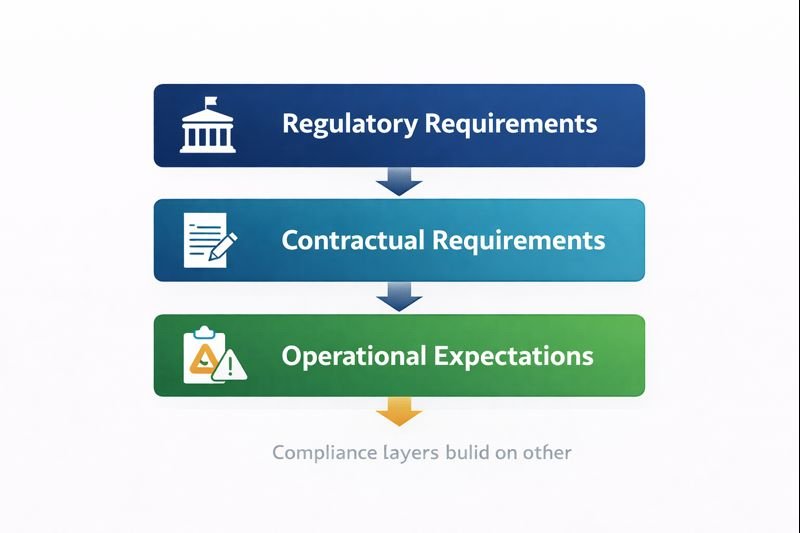
The Three Levels of Truck Insurance Requirements (Critical Framework)
All truck insurance requirements fall into one of three categories.
Confusing these categories causes most compliance issues.
Regulatory Requirements
These are imposed by governing authorities based on jurisdiction and operating authority.
Contractual Requirements
These arise from shipping contracts, leases, or carrier agreements.
Operational Expectations
These are not mandated, but are often assumed due to financing, risk exposure, or industry norms.
Understanding which category a requirement falls into is essential.
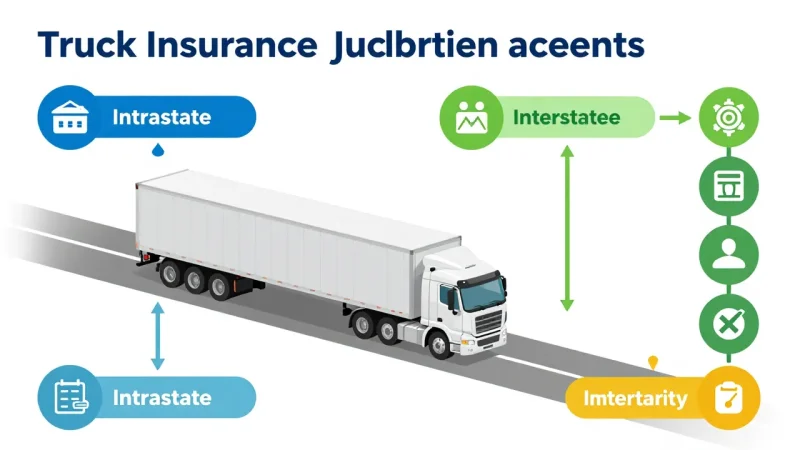
Why Truck Insurance Requirements Are Not Uniform
Requirements differ because trucking operations differ.
Operating Authority
Requirements often depend on whether a truck operates:
Under its own authority
Under another entity’s authority
Within a leased structure
Jurisdictional Scope
Intrastate and interstate operations face different oversight and compliance expectations.
Exposure Profile
Vehicle size, cargo type, and operational risk influence insurance thresholds.
This is why two identical trucks can face different requirements.
Why Truck Insurance Requirements Are Not Uniform
Requirements differ because trucking operations differ.
Requirements often depend on whether a truck operates:
Under its own authority
Under another entity’s authority
Within a leased structure
Jurisdictional Scope
Intrastate and interstate operations face different oversight and compliance expectations.
Exposure Profile
Vehicle size, cargo type, and operational risk influence insurance thresholds.
This is why two identical trucks can face different requirements.
Liability Insurance Requirements
Liability insurance requirements is the most consistently required component of truck insurance.
It exists to ensure that:
Bodily injury to others can be addressed
Property damage caused by truck operation is financially covered
Liability requirements are typically tied to:
Operating authority
Jurisdiction
Exposure classification
This layer forms the regulatory backbone of trucking insurance coverage.
Cargo Responsibility Requirements
Cargo-related insurance requirements apply when freight responsibility creates third-party exposure.
These requirements depend on:
What is being transported
Who is contractually responsible
Whether operations involve regulated commodities
Cargo Insurance requirements are not universal, but when they apply, they are often misunderstood.
Vehicle & Equipment Coverage Expectations
Physical damage coverage expectations is not always mandated by regulators.
However, it is often required due to:
Financing agreements
Leasing contracts
Operational risk tolerance
While not regulatory, these requirements can still be binding.
Proof of Insurance & Filing Obligations
Compliance does not stop at coverage.
Truck insurance requirements framework:
Proof-of-insurance filings
Certificates of coverage
Ongoing verification
Failure to meet filing obligations can result in non-compliance even when coverage exists.
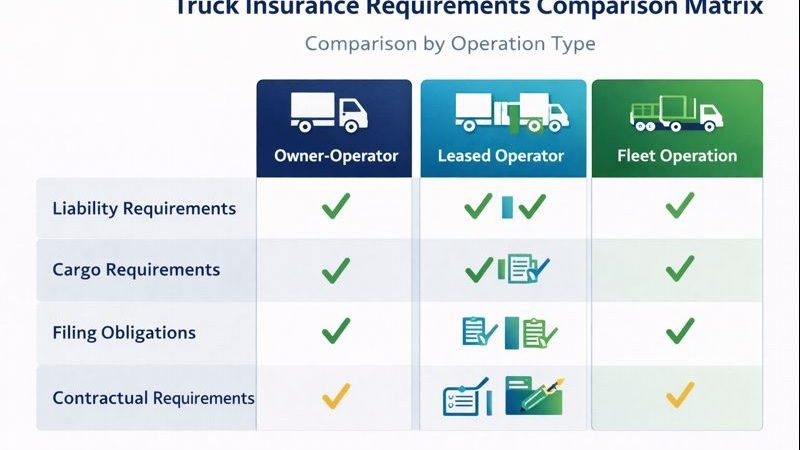
How Requirements Change by Operation Type
Owner-Operator Operations
Requirements typically align directly with operating authority and control.
Leased Operations
Insurance responsibility may shift depending on operational phase and control
Fleet Operations
Fleet requirements scale with vehicle count, driver exposure, and aggregated risk.
Interstate vs Intrastate Operations
Interstate operations usually face broader regulatory oversight.
Regulatory vs Contractual Enforcement
Not all requirements are enforced by regulators.
Contractual requirements can:
Be enforced through agreements
Trigger penalties or termination
Override assumptions about coverage sufficiency
Ignoring contractual requirements is a common compliance failure.
Why “Meeting Requirements” Is Often Misinterpreted
Common misunderstandings include:
Treating requirements as full protection
Assuming one rule applies to all trucks
Confusing regulatory and contractual standards
Overlooking documentation obligations
Most violations stem from misclassification, not lack of insurance.
How Requirements Evolve Over Time
Truck insurance requirements change when:
Authority changes
Operations expand
Jurisdictions shift
Contracts are updated
Compliance requires periodic reassessment.
How to Interpret Truck Insurance Requirements Correctly
Clear interpretation requires asking:
Which authority governs this operation?
Is the requirement regulatory or contractual?
What exposure is being regulated?
What documentation is required?
These questions prevent assumption-based compliance.
FAQs
What are truck insurance requirements?
They are minimum financial responsibility standards tied to authority, jurisdiction, and exposure.
Are truck insurance requirements the same for all trucks?
No. Requirements vary based on operation type and jurisdiction.
Do insurance requirements guarantee full coverage?
No. They establish compliance thresholds, not comprehensive protection.
Can requirements change over time?
Yes. Changes in authority, operations, or contracts can alter requirements.
Are contractual insurance requirements enforceable?
Yes. Contractual requirements can be binding even when not regulatory.
Bottom Line
Truck insurance requirements exist to establish baseline compliance, not complete protection.
Understanding how requirements are structured — and where they come from — is essential for operational clarity and regulatory confidence.
This page serves as the compliance reference point for the site.