
Car Hauler Insurance Cost: Why Vehicle Count Multiplies Risk
A car hauler pulls into a dealership lot to unload vehicles.
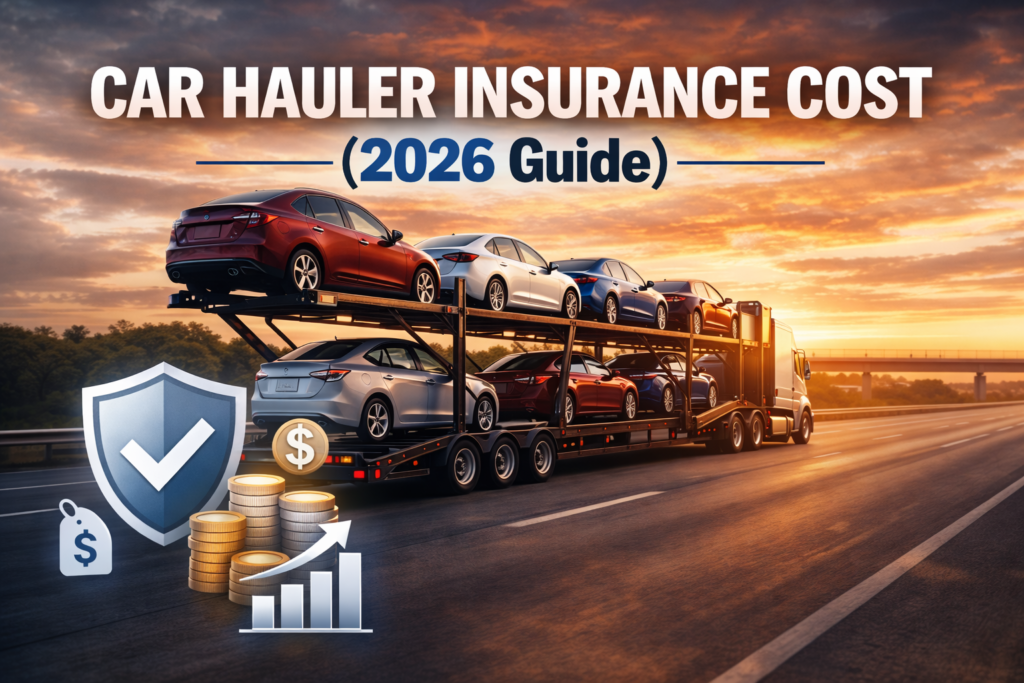
The truck may carry seven or eight cars stacked across two decks. Each vehicle must be carefully maneuvered down narrow ramps without contacting another vehicle or the trailer frame.
The entire unloading process may take less than twenty minutes.
But a small mistake—an incorrect ramp angle, tight clearance, or sudden movement—can damage several vehicles at once.
That stacked exposure explains car hauler insurance cost.
Unlike standard trucking operations that transport a single cargo load, auto transport companies often carry multiple customer vehicles simultaneously. When incidents occur, the losses can compound quickly because several vehicles may be involved in the same claim.
For insurers, that multi-vehicle exposure becomes the primary factor influencing pricing.
Understanding how these risks accumulate explains why insurance premiums for car haulers vary significantly across the industry.
Car Hauler Insurance Cost — Quick Answer
Cost Type | Typical Range |
Monthly car hauler insurance | $750 – $2,500+ |
Annual car hauler insurance | $9,000 – $30,000+ |
Small single-car haulers | $7,000 – $12,000 yearly |
Multi-vehicle carriers | $12,000 – $30,000+ yearly |
Actual insurance premiums depend on:
- number of vehicles transported
• cargo value
• trailer configuration
• driver history
• coverage layers
How Much Does Car Hauler Insurance Cost in 2026?
Most car hauler operators pay $9,000 to $30,000 per year for full commercial trucking insurance coverage.
However, the price range varies widely because auto transport operations differ significantly in size, cargo value, and operational exposure.
A small operator hauling two vehicles locally may pay far less than a large carrier transporting luxury vehicles across multiple states.
Insurance pricing for car hauling operations generally reflects:
- vehicle count per load
• cargo value
• loading complexity
• operating environment
• claims history
For a full explanation of commercial trucking policies, see
commercial-truck-insurance
Car Hauler Insurance Cost by Operation Type
Different auto transport operations carry very different risk profiles.
Transport Operation | Annual Cost Range | Why Pricing Differs |
Single-car trailer | $7,000 – $12,000 | Lower cargo exposure |
3–4 car wedge trailer | $10,000 – $18,000 | Moderate stacked risk |
7–10 car carrier | $15,000 – $30,000+ | High cargo aggregation |
New auto transport authority | $18,000 – $35,000+ | No operating history |
New operators often pay higher premiums until they build a safe driving and claims record.
Why Car Hauler Operations Are Evaluated Differently
Car hauling compresses risk into a single transport event.
Instead of hauling one cargo asset, operators frequently transport multiple vehicles simultaneously, which multiplies potential losses.
Several operational characteristics explain why insurers evaluate car haulers differently.
Multiple Vehicles per Load
The most obvious difference is cargo quantity.
A car carrier may transport six to ten vehicles on a single trip. If an accident or loading error occurs, several customer vehicles could be affected.
This stacked exposure increases potential claim severity.
Loading and Unloading Complexity
Many incidents occur during loading or unloading rather than during highway travel.
Common loading hazards include:
- ramp misalignment
• tight deck clearances
• steep loading angles
• vehicle positioning errors
Because vehicles are stacked closely together, even small mistakes can damage several cars simultaneously.
Cargo Sensitivity
Passenger vehicles are cosmetically sensitive cargo.
Minor contact that might be insignificant in freight transport can still produce repair claims.
Luxury vehicles, electric vehicles, and classic cars can significantly increase cargo claim costs.
Core Cost Drivers Behind Car Hauler Insurance
Several operational factors strongly influence auto transport insurance pricing.
Vehicle Count per Load
Higher vehicle counts increase potential claim severity.
A single loading incident involving eight vehicles is far more expensive than a typical single-cargo freight claim.
Cargo Value
Vehicle transport operations often carry high-value cargo.
Transporting luxury vehicles, sports cars, or electric vehicles increases insurance exposure.
Trailer Configuration
Car hauler trailers come in multiple configurations:
- wedge trailers
• multi-level carriers
• enclosed transport trailers
More complex trailers increase loading difficulty and operational risk.
Operating Environment
Insurance pricing also depends on where auto transport occurs.
Operating Area | Risk Level |
Rural dealerships | Lower |
Suburban areas | Moderate |
Dense urban areas | Higher |
Urban environments often involve tighter loading areas and increased accident risk.
Claims and Driving History
Insurers review an operator’s past claims carefully.
Important factors include:
- previous cargo damage claims
• accidents involving transported vehicles
• driver experience
• safety record
Carriers with strong safety records typically receive lower premiums over time.

Coverage Layers That Shape Car Hauler Insurance Cost
Auto transport insurance combines several coverage layers to address different exposures.
Primary Liability Insurance
Primary liability covers injuries or property damage caused to other parties.
The Federal Motor Carrier Safety Administration (FMCSA) requires interstate carriers to maintain minimum liability coverage of $750,000, although many brokers require $1 million or more.
Typical cost range:
Coverage | Annual Cost |
Primary liability | $6,000 – $14,000 |
Cargo Insurance
Cargo coverage protects the vehicles being transported.
Because several vehicles may be involved in a single claim, cargo insurance often plays a major role in car hauler premiums.
Typical cost range:
Coverage | Annual Cost |
Auto transport cargo insurance | $2,000 – $8,000+ |
Physical Damage Insurance
Physical damage coverage protects the truck and trailer themselves.
It covers:
- collisions
• theft
• vandalism
• weather damage
Premiums typically cost 3%–6% of the vehicle’s value annually.
More details can be found here:
physical-damage-trucking-insurance
Equipment Coverage
Auto transport trailers include expensive equipment such as:
- hydraulic systems
• ramps
• loading decks
• tie-down systems
Equipment coverage protects these assets during transport operations.
Real Example: Car Hauler Insurance Pricing
Example scenario:
Independent auto transport operator with 3-car wedge trailer.
Coverage | Annual Cost |
Primary liability | $8,400 |
Cargo insurance | $3,000 |
Physical damage | $2,800 |
Equipment coverage | $900 |
Total estimated insurance cost:
≈ $15,100 annually
Why Aggregate Risk Drives Car Hauler Insurance Cost
The defining exposure for auto transport operations is aggregate cargo risk.
A single incident may involve:
- multiple damaged vehicles
• dealership property damage
• expensive cargo claims
Even low-speed incidents during loading can create large claims when several vehicles are involved.
For insurers, the primary question becomes:
How many vehicles could be affected in a single event?
The more vehicles carried simultaneously, the higher the potential claim severity.
Why Online Insurance Estimates Can Be Misleading
Many online insurance calculators assume simplified trucking operations.
They often assume:
- single cargo loads
• predictable freight handling
• consistent cargo value
• minimal loading exposure
Auto transport rarely follows those patterns.
Once insurers evaluate cargo stacking, vehicle values, and loading complexity, premiums adjust accordingly.
How Car Haulers Reduce Insurance Costs
Experienced operators often lower insurance costs through better operational practices.
Improving Loading Safety
Proper ramp alignment and vehicle positioning reduce damage risk.
Maintaining Equipment
Well-maintained ramps, hydraulics, and tie-downs reduce equipment failure risk.
Driver Training
Drivers trained in safe loading procedures often receive better insurance pricing.
Increasing Deductibles
Higher deductibles reduce monthly premiums but increase out-of-pocket expenses after claims.
When Car Hauler Insurance Cost Should Be Reviewed
Insurance coverage should be reviewed when:
- vehicle count per load increases
• new trailers are added
• higher-value vehicles are transported
• operating territories expand
Policies aligned with one operational model may not fit another.
Final Perspective
Car hauler insurance cost is driven primarily by aggregate cargo exposure.
Unlike traditional freight transport, auto transport operations frequently carry multiple vehicles simultaneously. That stacking effect means a single mistake during loading or unloading can produce several claims at once.
Two carriers may operate similar trucks, yet their insurance costs can differ dramatically depending on:
- vehicle count per load
• cargo value
• trailer configuration
• driver safety history
For most operators, annual premiums typically range between $9,000 and $30,000, though new carriers may pay more until they build a safety record.
Understanding these risk factors helps car hauler businesses evaluate insurance quotes more accurately and manage long-term operating costs.