
Flatbed Truck Insurance
Flatbed truck insurance exists because the load itself becomes part of the driving risk.
In flatbed operations, freight is not contained by walls, doors, or fixed enclosures. The shape, weight, balance, and securement of the load directly affect how the truck handles, stops, turns, and interacts with other vehicles. When something goes wrong, the loss is often tied as much to the cargo as to the truck itself.
This is why flatbed truck insurance coverage is not simply standard trucking insurance with cargo added. It is a specialty freight insurance structure built around load behavior, securement responsibility, and open-deck exposure.
What Flatbed Truck Insurance Actually Is
Flatbed truck insurance refers to the insurance framework used for trucks hauling freight on open decks rather than enclosed trailers.
What defines flatbed semi truck insurance is not mileage or route length.
It is defined by:
Direct responsibility for load securemen
Freight that varies by size, shape, and weight
Cargo exposure to wind, weather, and roadway conditions
Increased interaction between freight and surrounding traffic
Box truck Insurance must respond to freight-driven exposure, not just vehicle movement.
Why Flatbed Truck Insurance Is Fundamentally Different
Flatbed operations face a risk profile driven by cargo behavior, not cargo containment.
Key structural differences include
Freight is not physically restrained by trailer walls
Securement methods change by load
Loads may exceed standard dimensions
Cargo insurance stability affects vehicle handling
Losses often involve:
Shifted or detached freight
Securement failure
Roadway debris incidents
Property or vehicle damage caused by cargo
Many flatbed losses occur without a collision.
The Freight Accountability Model (Core Authority Framework)
Flatbed insurance revolves around who controls the freight and how it is secured.
Most flatbed losses fall into four accountability categories.
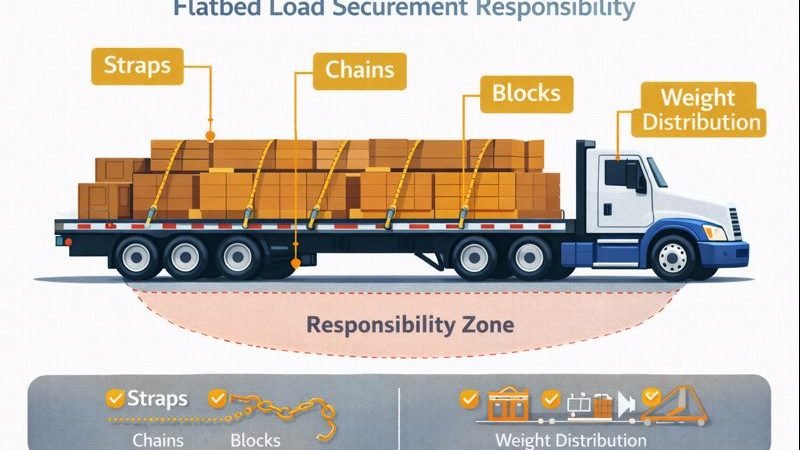
Load Securement Accountability
Responsibility for:
Strapping
Chaining
Blocking
Weight distribution
Securement quality often determines both liability and coverage response.
Freight Shape & Dimension Accountability
Irregular freight introduces:
Clearance risk
Turning limitations
Visibility challenges
Oversized loads extend exposure beyond the truck footprint.
Environmental Interaction Accountability
Open decks expose freight to:
Wind forces
Weather conditions
Road vibration
Environmental interaction increases loss probability over distance.
Third-Party Exposure Accountability
Detached or shifted freight can:
Damage infrastructure
Create roadway hazards
Liability may extend beyond direct vehicle contact.
Core Coverage Layers in Commercial Truck Insurance
Flatbed truck insurance works best when understood as freight-centric risk protection.
Liability Coverage (Freight-Influenced Exposure Layer)
Liability coverage responds when flatbed operation causes injury or property damage.
For flatbed operations:
Cargo may be the direct cause of loss
Multiple parties may be affected
Securement responsibility is often central
This layer defines the operation’s external responsibility boundary.
Physical Damage Coverage (Truck & Trailer Protection)
Physical damage coverage applies to the tractor and flatbed trailer.
For flatbed operations, this coverage affects:
Trailer repair or replacement timelines
Equipment damage recovery
Operational downtime
Losses often involve both the truck and the freight.
Cargo Responsibility Coverage
Cargo coverage plays a central role in flatbed operations.
Exposure depends on:
Freight type
Securement responsibility
Contractual obligations
Open-deck hauling increases cargo loss probability.
Downtime & Freight Disruption Considerations
Flatbed downtime often involves:
Missed delivery windows
Specialized freight delays
Limited alternative transport options
Coverage addressing downtime varies widely and must be reviewed carefully.
Why Flatbed Losses Behave Differently
Flatbed losses differ from enclosed-freight losses in three ways:
Cargo directly contributes to loss events
Securement methods influence liability
Losses may occur without vehicle impact
Insurance limits and deductibles must be evaluated through a freight-behavior lens.
Flatbed Truck Insurance vs Other Truck Insurance Types
The distinction is operational.
Semi trucks focus on enclosed freight over distance
Box trucks focus on delivery density
Flatbeds focus on freight behavior and securement
Applying enclosed-freight logic to open-deck hauling creates coverage gaps.
Common Coverage Gaps in Flatbed Truck Insurance
Recurring issues include:
Securement responsibility misunderstood
Cargo variability not reflected in coverage
Oversized load exposure underestimated
Deductibles misaligned with cargo-related losses
These gaps often surface after freight-related incidents.
How Flatbed Truck Insurance Evolves Over Time
Insurance needs change as freight profiles change.
Common inflection points include:
Heavier or oversized loads
Specialized freight contracts
Longer routes
Additional trailers or equipment
Coverage structure should evolve with freight complexity.
How to Evaluate Flatbed Truck Insurance Structure
Before comparing providers or costs, consider:
Is freight variability clearly addressed?
Do limits reflect third-party cargo exposure?
These questions define structure before pricing becomes relevant.
FAQs
What is flatbed truck insurance?
Flatbed truck insurance cost is the insurance framework designed for trucks hauling exposed freight on open decks.
Is flatbed truck insurance different from semi truck insurance?
Yes. Flatbed truck insurance focuses on freight visibility and securement responsibility rather than enclosed cargo transport.
Does flatbed truck insurance cover shifted or dropped loads?
Coverage response depends on securement responsibility, freight type, and how the incident occurred.
Why is securement so important in flatbed insurance?
Improper securement can directly cause cargo loss, roadway hazards, and third-party damage.
Does flatbed truck insurance need to change with different freight?
Yes. Freight size, weight, and shape significantly affect exposure and coverage needs.
Bottom Line
Flatbed truck insurance exists because cargo behavior directly affects liability and loss severity.
When insurance structure reflects securement responsibility, freight variability, and open-deck exposure, it provides stability. When it does not, losses escalate quickly and visibly.
Understanding that structure comes before any cost or provider decision.