
Truck Insurance Limits Explained
Most trucking insurance failures don’t happen because coverage is missing.
They happen because insurance limits are misunderstood.
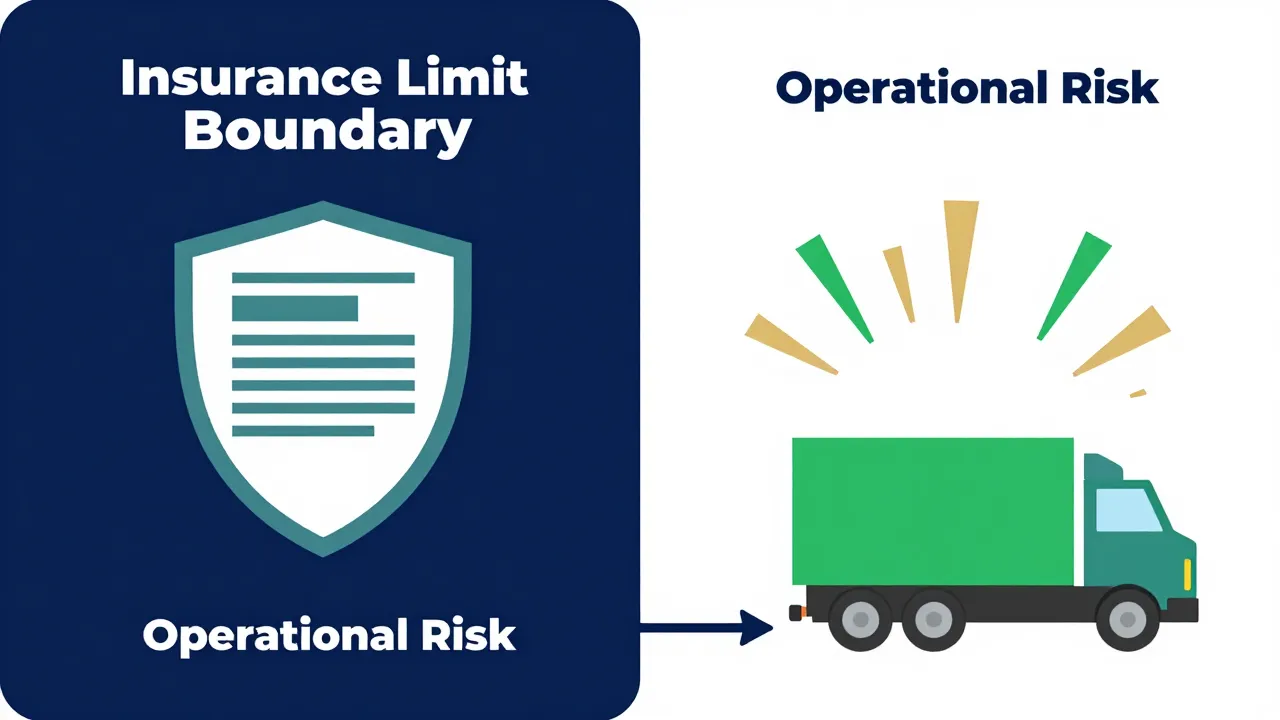
In trucking, limits are often treated as numbers to select or compare. In reality, limits function as risk boundaries — invisible lines that determine when insurance stops absorbing loss and when financial responsibility shifts back to the operation.
This page explains commercial truck insurance limits as they actually work in real trucking environments, focusing on risk transfer, exposure thresholds, and limit behavior, not on choosing amounts or buying policies.
What an Insurance Limit Actually Is
An insurance limit is the maximum amount of financial responsibility an insurance requirements will assume for a covered loss.
It does not represent:
Expected loss size
Adequate protection
Recommended coverage
Total exposure
A limit defines a stop point, not a safety guarantee.
When losses exceed that stop point, responsibility moves beyond the policy — regardless of whether coverage technically applies.
Why Insurance Limits Matter More in Trucking
Limits play an outsized role in trucking because trucking combines:
High third-party exposure
Heavy vehicles and cargo
Mobile, multi-jurisdiction risk
Split operational control
Losses may be infrequent, but when they occur, severity can escalate rapidly. Limits exist to cap insurer responsibility — not to cap total loss.
Coverage vs Limits: A Critical Distinction
Coverage answers what types of losses are eligible.
Limits answer how much responsibility is absorbed.
A loss can be:
Fully covered in scope
Properly triggered
Clearly eligible
…and still exceed limits.
When that happens, coverage exists — but protection ends.
This distinction is often missed in trucking discussions.
The Truck Insurance Limits Hierarchy (Core Framework)
All truck insurance cost limits fall into three functional tiers.
Understanding this hierarchy is essential.
Required Limits
These establish minimum compliance based on authority or jurisdiction.
They ensure baseline financial responsibility — nothing more.
Operational Limits
These align limits with how risk actually manifests in operations.
They reflect:
Exposure type
Routing complexity
Cargo responsibility
Traffic environment
Excess & Layered Limits
These manage loss severity beyond primary exposure.
They are structured to absorb catastrophic or multi-party loss scenarios.
Confusing these tiers leads to misplaced confidence.
How Truck Insurance Limits Are Structured
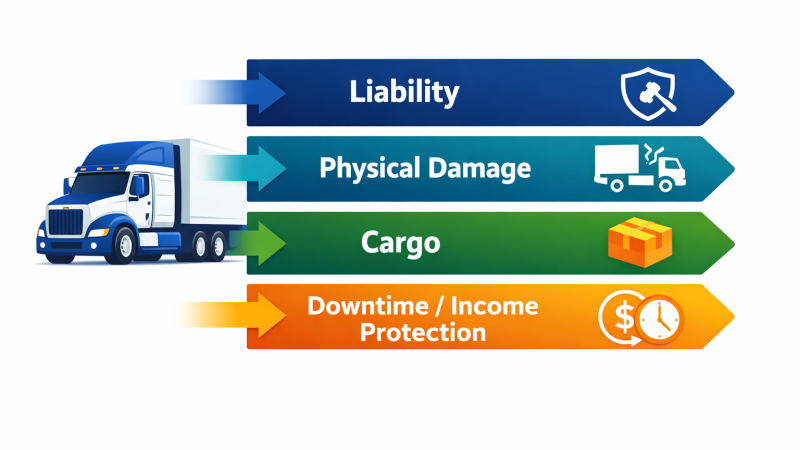
Limits are usually structured by coverage layer, not by operation as a whole.
Common patterns include:
Separate liability limits
, cargo, and other coverages
Per-occurrence caps rather than blanket protection
Aggregates applied selectively
Understanding which limit applies to which exposure is more important than the limit value itself.
Per-Occurrence Limits Explained
Per-occurrence limits cap responsibility for a single incident.
Key characteristics:
Reset after each covered loss
Apply independently per event
Do not accumulate across incidents
These limits define single-event exposure, not annual risk.
Aggregate Limits Explained
Aggregate limits cap total responsibility over a defined period.
Once exhausted:
Coverage may stop responding
Protection may not reset until renewal
Aggregates are less common in core liability but appear in certain trucking contexts where misunderstanding them creates major exposure.
How Limits Interact With Operational Risk
Limits are not static numbers. Their meaning changes with operations.
Risk factors that affect limit relevance include:
Mileage and routing density
Cargo type and control
Operating authority Truck Insurance Limits Explained
Most trucking insurance failures don’t happen because coverage is missing.
They happen because insurance coverage are misunderstood.
In trucking, limits are often treated as numbers to select or compare. In reality, limits function as risk boundaries — invisible lines that determine when insurance stops absorbing loss and when financial responsibility shifts back to the operation.
This page explains truck insurance limits as they actually work in real trucking environments, focusing on risk transfer, exposure thresholds, and limit behavior, not on choosing amounts or buying policies.

What an Insurance Limit Actually Is
An insurance limit is the maximum amount of financial responsibility an insurance policy will assume for a covered loss.
It does not represent:
Expected loss size
Adequate protection
Recommended coverage
Total exposure
A limit defines a stop point, not a safety guarantee.
When losses exceed that stop point, responsibility moves beyond the policy — regardless of whether coverage technically applies.
Why Insurance Limits Matter More in Trucking
Limits play an outsized role in trucking because trucking combines:
High third-party exposure
Heavy vehicles and cargo
Mobile, multi-jurisdiction risk
Split operational control
Losses may be infrequent, but when they occur, severity can escalate rapidly. Limits exist to cap insurer responsibility — not to cap total loss.
Coverage vs Limits: A Critical Distinction
Coverage answers what types of losses are eligible.
Limits answer how much responsibility is absorbed.
A loss can be:
Fully covered in scope
Properly triggered
Clearly eligible
…and still exceed limits.
When that happens, coverage exists — but protection ends.
This distinction is often missed in trucking discussions.
The Truck Insurance Limits Hierarchy (Core Framework)
All truck insurance limits fall into three functional tiers.
Understanding this hierarchy is essential.
Required Limits
These establish minimum compliance based on authority or jurisdiction.
They ensure baseline financial responsibility — nothing more.
Operational Limits
These align limits with how risk actually manifests in operations.
They reflect:
Exposure type
Routing complexity
Cargo responsibility
Traffic environment
Excess & Layered Limits
These manage loss severity beyond primary exposure.
They are structured to absorb catastrophic or multi-party loss scenarios.
Confusing these tiers leads to misplaced confidence.
Urban vs rural exposure
As operations evolve, the same numeric limit may represent very different risk boundaries.
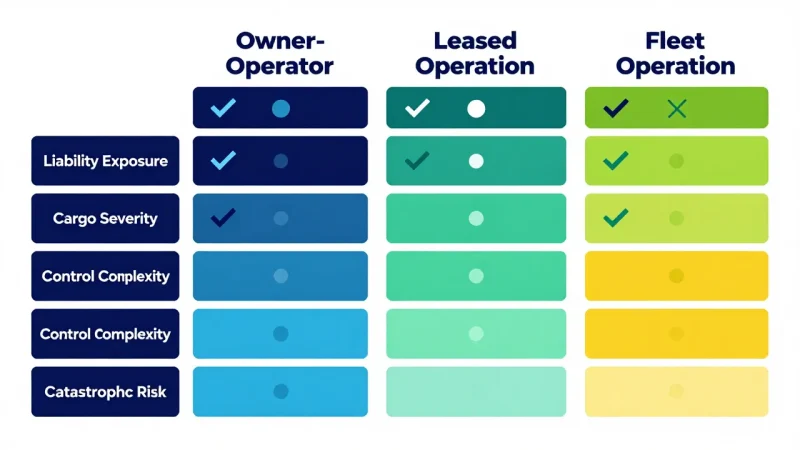
Limits Across Different Trucking Operations
Owner-Operator Operations
Owner-operator truck insurance cost
Limits often serve as the primary buffer against third-party exposure because responsibility is centralized.
Leased Operations
Limits may interact with other policies depending on control and authority at the time of operation.
Fleet Operations
Fleet limits aggregate exposure across vehicles and drivers, increasing the importance of structure and layering.
Minimum Limits vs Real-World Exposure
Some limits exist because they are required.
Others exist because exposure demands them.
Minimum limits establish compliance, not safety.
Treating compliance thresholds as protection levels is a common and costly mistake.
How Limits Change Over Time
Truck insurance limits can become misaligned due to:
Expansion into new jurisdictions
Changes in cargo responsibility
Increased mileage or traffic density
Growth from single-truck to fleet operations
Limits require periodic reassessment to remain meaningful.
Common Misunderstandings About Truck Insurance Limits
Repeated misconceptions include:
Higher limits automatically mean better protection
Limits eliminate risk
Limits apply universally across losses
Limits are recommendations rather than caps
These misunderstandings typically surface during large claims.
How to Think About Limits Without Choosing Numbers
A useful framework is to ask:
Where does responsibility shift if this limit is exceeded?
Which exposure does this limit actually cap?
How does this limit interact with other policies?
This approach clarifies the role without prescribing amounts.
Preparing for Cost Discussions
Insurance costs are always downstream of limits.
Without understanding how limits function:
Cost comparisons lack context
Pricing decisions become arbitrary
Exposure remains undefined
This page exists to establish that understanding before cost is discussed.
FAQs
What are truck insurance limits?
They define the maximum financial responsibility an insurance policy will absorb for a covered loss.
Do higher limits always mean better protection?
No. Limits cap responsibility but do not eliminate exposure.
Are truck insurance limits required?
Some are required for compliance, while others are driven by contracts or operational risk.
Do limits reset after a claim?
Per-occurrence limits reset; aggregate limits may not until renewal.
Can limits become inadequate over time?
Yes. Changes in operations can alter how limits align with exposure.
Bottom Line
Truck insurance limits define where insurance responsibility ends and operational risk begins.
Understanding limits is not about choosing numbers — it is about understanding risk boundaries.
This page provides that framework.