

Owner Operator Insurance
Owner operator insurance exists because there is no buffer.
When a truck is owned and operated by the same individual or business, insurance coverage does not sit behind a fleet, a carrier, or an employer. It sits directly between the operator and financial exposure. Every loss, delay, or dispute lands closer to the operation itself.
This is why owner operator insurance limits is not a variation of trucking insurance — it is a distinct risk structure defined by authority, control, and concentrated responsibility.
What Owner Operator Insurance Actually Means
Owner operator insurance refers to the insurance requirements used when a truck is operated independently and the operator retains direct responsibility for outcomes.
What defines the model is not:
Truck size
Business name
Policy branding
What defines it is:
Who controls the truck
Who carries operating authority
Who absorbs loss when something goes wrong
In owner-operator setups, these roles usually converge into a single point of responsibility.
Why Owner Operator Insurance Is Fundamentally Different
Owner operators face a risk profile that cannot be diluted.
Key characteristics include:
No shared liability pool
No employer-level protection
No internal risk distribution
This means:
Small losses are felt immediately
Downtime directly halts income
Insurance structure must perform under stress
Insurance that works “well enough” for fleets often fails owner operators.
Authority and Control: The Core of Owner Operator Insurance
Insurance behavior depends on who controls the truck at the moment of loss.
Operating Under Independent Authority
When operating under your own authority:
Liability responsibility is direct
Compliance filings are tied to the operator
Insurance responds without intermediaries
This model offers control — but also concentrates exposure.
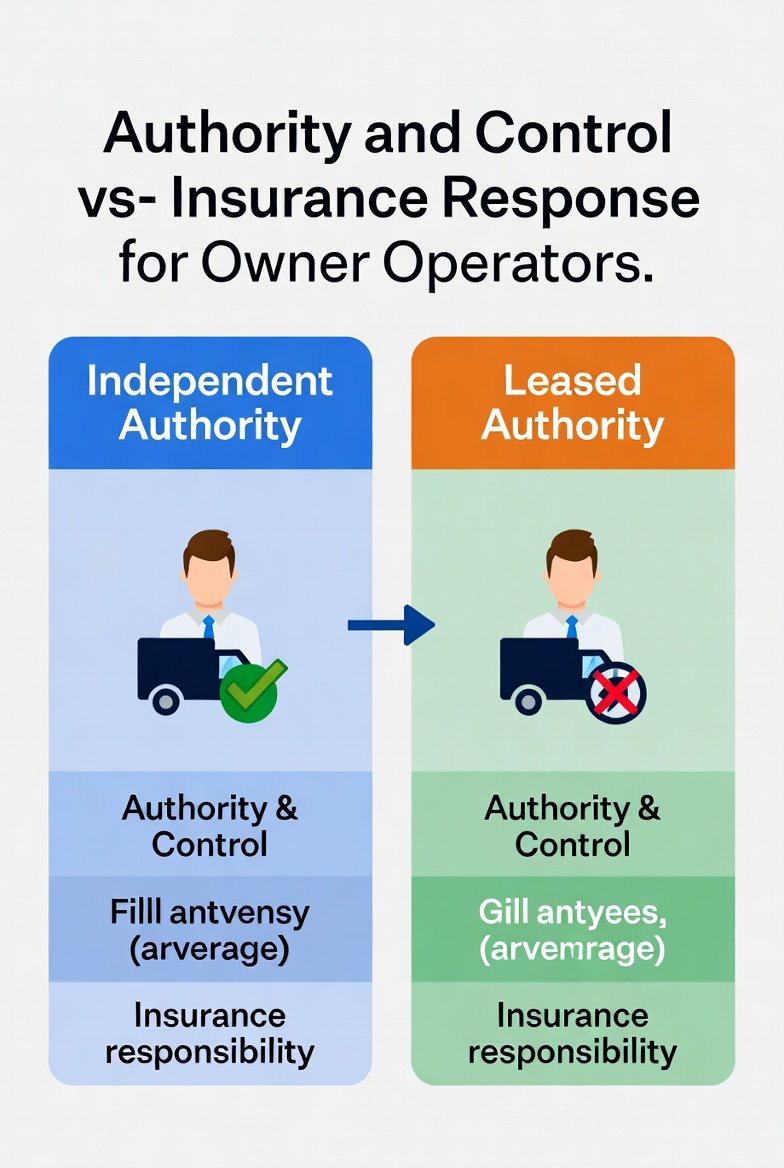
Operating Under Leased Authority
When operating under another entity’s authority:
Control may shift during different phases
Insurance responsibility may change mid-operation
Contracts influence coverage behavior
Misunderstanding authority is one of the most common causes of uncovered losses.
Core Coverage Layers in Owner Operator Insurance
Rather than policy names, owner operator insurance is best understood as risk layers.
Liability Coverage (Primary Exposure Layer)
Liability coverage addresses injury or property damage caused by truck operation.
For owner operators, this layer:
Represents the primary third-party risk defense
Is often the most scrutinized during claims
Defines the operation’s public exposure boundary
Because responsibility is direct, misalignment here is costly.
Physical Damage Coverage (Asset Protection Layer)
Physical damage coverage applies to damage to the truck itself.
For owner operators, this coverage directly affects:
Repair speed
Downtime duration
Cash-flow pressure
Because the truck is the income engine, this layer often matters more operationally than liability on routine losses.
Cargo Responsibility Coverage
Cargo coverage applies when the owner operator is responsible for freight loss or damage.
Responsibility depends on:
Contractual obligations
Control of the load
Role in the transport chain
Cargo exposure is frequently assumed incorrectly — especially in leased or mixed operations.
Downtime & Income Interruption Considerations
Some insurance structures include protection intended to address income loss during downtime.
These protections vary widely in:
Trigger conditions
Duration
Limitations
They should be evaluated as operational tools, not guarantees.
How Risk Is Concentrated in Owner Operator Insurance
Unlike fleets, owner operator insurance does not spread risk.
This means:
Deductibles hit liquidity immediately
Limits define clear exposure ceilings
Claims behavior affects future insurability
Insurance must therefore be structured to handle both frequency and severity risk without external support.
Owner operator Insurance vs Fleet Insurance
The differences are structural, not cosmetic.
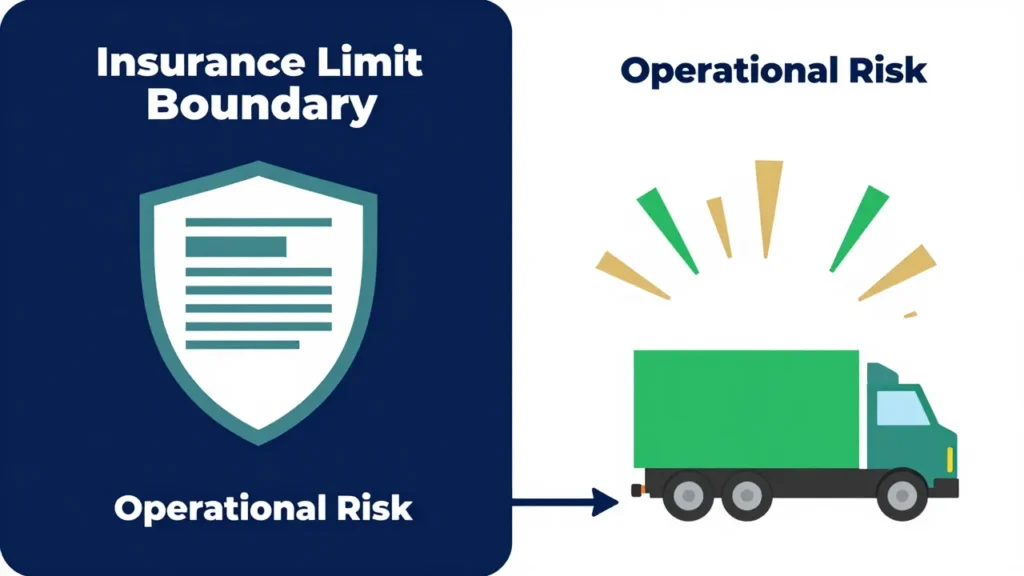
Fleet insurance distributes loss across vehicles
Owner operator insurance concentrates exposure
Fleet downtime is absorbed collectively
Owner operator downtime stops revenue
This is why fleet-based insurance logic often fails when applied to owner operators.
Common Coverage Gaps for Owner Operators
Recurring issues include:
Authority changes not reflected in insurance
Deductibles misaligned with cash flow
Cargo responsibility assumed rather than defined
Coverage built for a previous operating model
These gaps often remain invisible until a claim forces clarity.
How Owner Operator Insurance Evolves Over Time
Insurance needs change as operations change.
Common inflection points include:
Transitioning from leased to independent authority
Expanding routes or cargo types
Increasing mileage or operational complexity
Coverage should be reviewed when these changes occur.
How to Evaluate Owner Operator Insurance Structure
Before comparing providers or costs, it helps to ask:
Where does responsibility sit at each stage of operation?
Which risks are absorbed by insurance versus the operation?
How do deductibles and limits interact with cash flow?
These questions define structure before pricing enters the discussion.
FAQs
What is owner operator insurance?
Owner operator insurance is the insurance framework used when a truck is operated independently with direct responsibility for operational and financial risk.
Is owner operator insurance the same for all independent truckers?
No. Coverage behavior varies based on authority, contracts, and how operations are structured.
Does owner operator insurance cover the truck itself?
Physical damage coverage may apply, depending on how the insurance is structured and who absorbs repair costs.
How does leased authority affect owner operator insurance?
Leased authority can shift insurance responsibility depending on control and contractual terms at the time of operation.
Does owner operator insurance need to change as operations grow?
Yes. Changes in authority, routing, or exposure often require coverage adjustments.
Bottom Line
Owner operator insurance is defined by concentrated responsibility.
When insurance structure aligns with authority, control, and operational reality, it provides stability. When it does not, gaps appear quickly and expensively.
Understanding that structure is essential before engaging with cost or provider decisions.