
Semi Truck Insurance
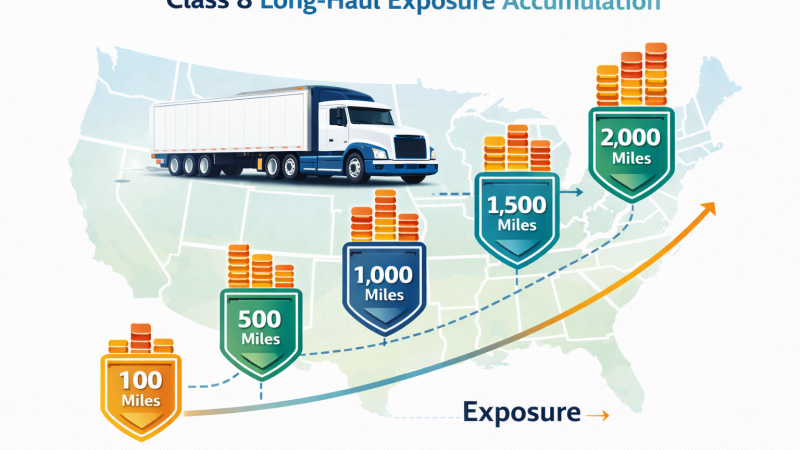
Semi truck insurance cost exists because exposure does not reset.
Class 8 trucks operate day after day, state after state, carrying heavy freight at highway speeds for extended periods of time. Unlike job-site trucks, where risk is concentrated into short operational windows, semi trucks accumulate exposure continuously. Every mile adds probability. Every hour compounds severity.
This is why semi truck insurance is not simply commercial truck insurance applied to a larger vehicle. It is a long-haul insurance structure built around distance, interstate complexity, cargo responsibility, and sustained high-severity potential.
What Semi Truck Insurance Actually Covers
Semi truck insurance refers to the insurance framework designed for Class 8 tractors operating in regional or long-haul freight transportation.
What defines semi truck insurance is not:
Truck brand
Trailer configuration
Route preference
It is defined by:
Sustained highway operation
Interstate travel
Heavy freight movement
Extended operating cycles
Insurance must respond to continuous exposure, not isolated events.
Why Semi Truck Insurance Is Fundamentally Different
Semi trucks face a risk profile built on duration and velocity, not proximity.
Key structural differences include:
Continuous high-speed travel
Extended braking distances
Multi-jurisdiction operation
Elevated multi-vehicle collision severity
Losses often involve:
Chain-reaction highway accidents
Cargo loss across state lines
Complex liability determination
Long recovery timelines far from base
Insurance for semi trucks must perform reliably under prolonged stress.
The Class-8 Exposure Model (Core Authority Framework)
Semi truck losses consistently originate from four exposure drivers.
Distance-Driven Probability
Every mile increases:
Collision likelihood
Mechanical stress
Fatigue-related risk
Insurance assumes exposure is constant, not episodic.
Speed + Mass Severity
Class 8 vehicles combine:
Highway speeds
Extreme vehicle mass
This pairing amplifies:
Impact force
Injury outcomes
Property damage scope
Severity is built into the vehicle class.
Cargo Responsibility Exposure
Semi trucks frequently haul third-party freight.
Risk depends on:
Type of cargo
Control of the load
Contractual responsibility
Cargo losses often trigger secondary financial consequences beyond physical damage.
Interstate Complexity
Cross-state operation introduces:
Multiple legal standards
Jurisdictional claim handling
Compliance variability
Insurance must remain coherent across borders.
Core Coverage Layers in Semi Truck Insurance
Owner Operator insurance works best when understood as layered exposure control, not individual policies.
Liability Coverage (Highway Severity Layer)
Liability coverage responds to injury or property damage caused by semi truck operation.
For Class 8 trucks:
Loss severity is typically high
Multi-vehicle involvement is common
Claims escalate quickly
This layer defines the public exposure boundary of the operation.
Physical Damage Coverage (Tractor & Trailer Protection)
Physical damage coverage applies to the tractor and, when applicable, the trailer.
For long-haul operations, this coverage affects:
Recovery logistics
Repair delays far from home base
Extended downtime
Highway losses often mean complex, multi-stage repairs.
Cargo Responsibility Coverage
Cargo coverage applies when freight is damaged or lost in transit.
Responsibility depends on:
Load control
Contract terms
Nature of the cargo
Cargo exposure is one of the most frequently misunderstood aspects of semi truck insurance.
Downtime & Operational Interruption Considerations
Long-haul downtime compounds quickly:
Missed delivery schedules
Contractual strain
Cascading operational disruption
Coverage intended to address downtime varies significantly in scope and limitations.
Why Highway Losses Behave Differently
Highway losses differ from job-site incidents in three ways:
Speed at impact
Multi-vehicle involvement
Distance from immediate support
Insurance limits and deductibles must be evaluated through a high-severity highway lens, not a local-operation mindset.
Semi Truck Insurance vs Other Commercial Truck Insurance
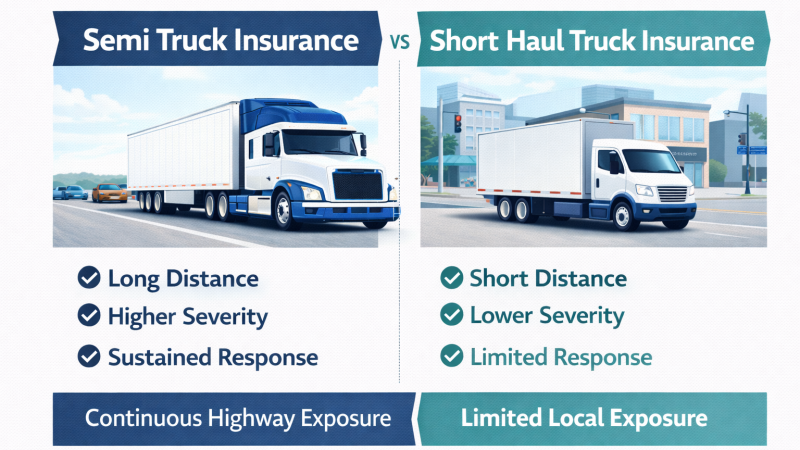
The distinction is operational.
Dump trucks Insurance concentrate risk at job sites
Box trucks operate locally
Semi trucks accumulate exposure continuously
Using short-haul insurance logic for long-haul Class 8 operations creates structural gaps.
Common Coverage Gaps in Semi Truck Insurance
Recurring issues include:
Cargo responsibility assumed instead of defined
Trailer coverage misaligned with control
Deductibles mismatched to long-haul cash flow
Policies structured for regional, not interstate, use
These gaps often surface only after a serious highway loss.
How Semi Truck Insurance Evolves Over Time
Insurance needs shift as operations change.
Common inflection points include:
Expanded routes
Higher-value or specialized cargo
Increased mileage
Additional trailers or equipment
Coverage structure should evolve alongside operational growth.
How to Evaluate Semi Truck Insurance Structure
Before comparing providers or costs, consider:
Where does cargo responsibility begin and end?
Do limits reflect highway-severity exposure?
These questions define structure before pricing is relevant.
FAQs
What is semi truck insurance?
Semi truck insurance is the insurance framework designed for Class 8 trucks operating in long-haul or regional freight transportation.
Is semi truck insurance different from other truck insurance?
Yes. Semi truck insurance is built around sustained highway exposure, interstate operation, and high-severity loss potential.
Does semi truck insurance cover cargo loss?
Cargo coverage may apply depending on contractual responsibility and control of the freight.
Why are semi truck highway losses more severe?
Vehicle mass and operating speed significantly increase impact force and damage scope.
Does semi truck insurance need to change as routes expand?
Yes. Longer routes, different cargo, and increased mileage often require coverage adjustments.
Bottom Line
Semi truck insurance exists because long-haul exposure compounds relentlessly.
When insurance structure reflects distance-driven probability, highway severity, and cargo responsibility, it provides stability. When it does not, losses escalate across miles, jurisdictions, and time.
Understanding that structure comes before any cost or provider decision.